Kitchen worktop, backsplash, flooring: the complete guide to choosing materials for your kitchen

Designing or renovating a kitchen is an architectural challenge that presents everyone with the same dilemma: how can aesthetics and functionality be combined in a kitchen designed for everyday living? The secret to a perfect kitchen lies in choosing surfaces that can withstand stains, moisture and impacts while giving the space a distinctive material and visual character.

In this guide, we explore how to choose and use surfaces for floors, walls and worktops, creating a kitchen that combines performance, functionality and elegance.

The kitchen worktop: the central element of a functional kitchen

As the true operational heart of the kitchen, the worktop is exposed every day to heat, cuts, impacts and contact with acidic substances. In this context, a porcelain stoneware kitchen worktop offers high performance thanks to the material’s compact structure and low porosity. These characteristics ensure resistance, reliability and easy maintenance over time.

What is the main difference between a ceramic kitchen worktop and a quartz one?

Unlike quartz, which can be sensitive to thermal shock, ceramic offers high resistance to elevated temperatures, making it particularly suitable for the kitchen environment. This is complemented by excellent scratch resistance and low porosity, qualities that help make porcelain stoneware a reliable and durable solution for kitchen worktops.

Protecting the wall: the monolithic backsplash

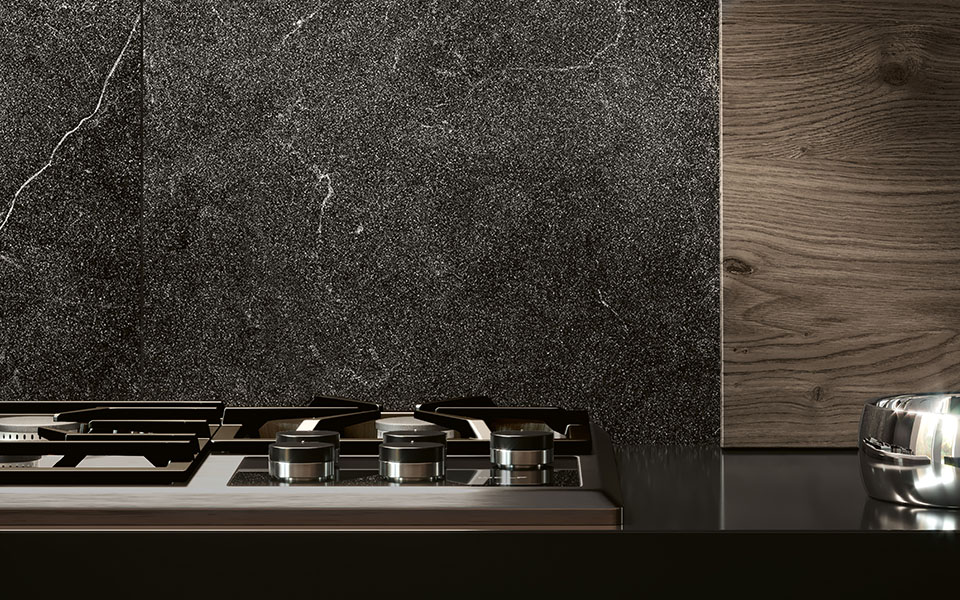
To ensure continuity with the performance of the worktop, the backsplash can be made with a compact, low-porosity surface. The use of large-format slabs also makes it possible to minimize grout lines, reducing the areas where dirt and residue can accumulate. The result is a surface that is easier to maintain and offers greater visual continuity, enhancing the clean, material character of the kitchen design.

The floor: durability and performance at the foundation of the design

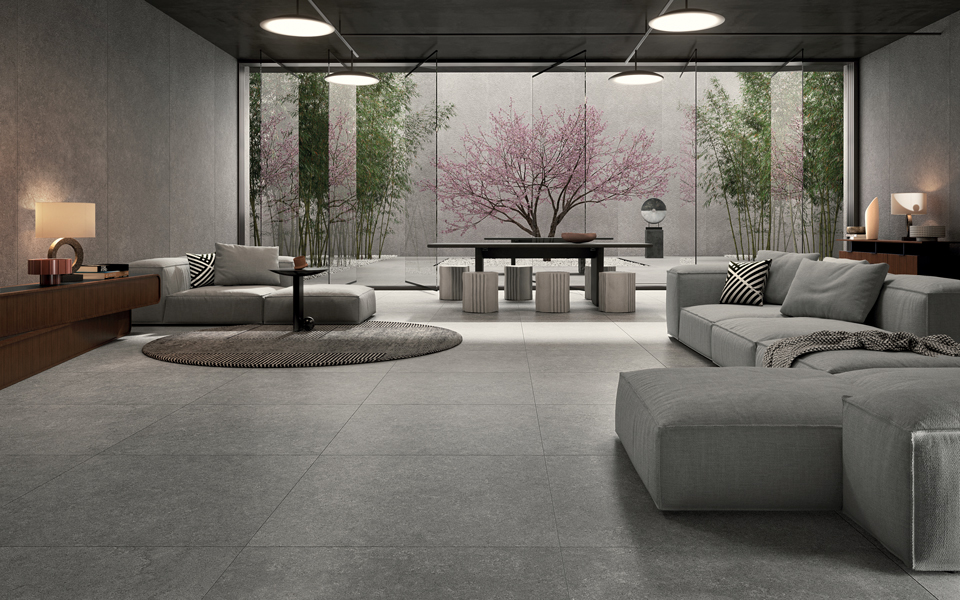
The kitchen floor is much more than a finishing surface: it helps define the identity of the space and must meet everyday requirements for resistance, practicality and durability.

From a performance perspective, it must withstand:

  • Frequent foot traffic.
  • Accidental impacts.
  • Daily washing and cleaning.

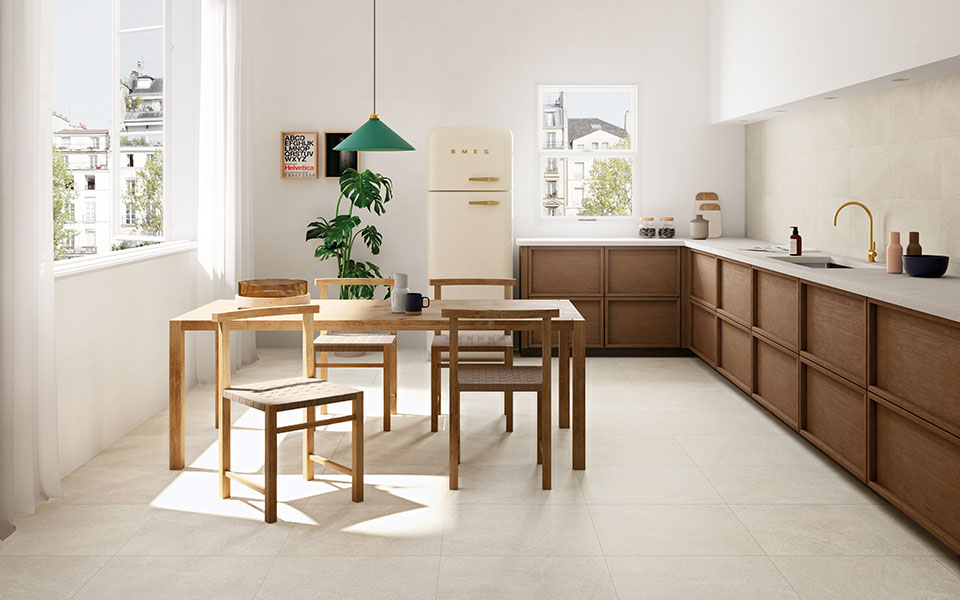
In this context, porcelain stoneware surfaces are a particularly effective solution. Their low porosity and ease of maintenance help preserve cleanliness, aesthetic quality and surface performance over time.

Choosing high-quality porcelain stoneware therefore means designing a floor that combines resistance, ease of maintenance and aesthetic continuity, while preserving the original character of the kitchen space over time.

Total Look: material continuity and design consistency

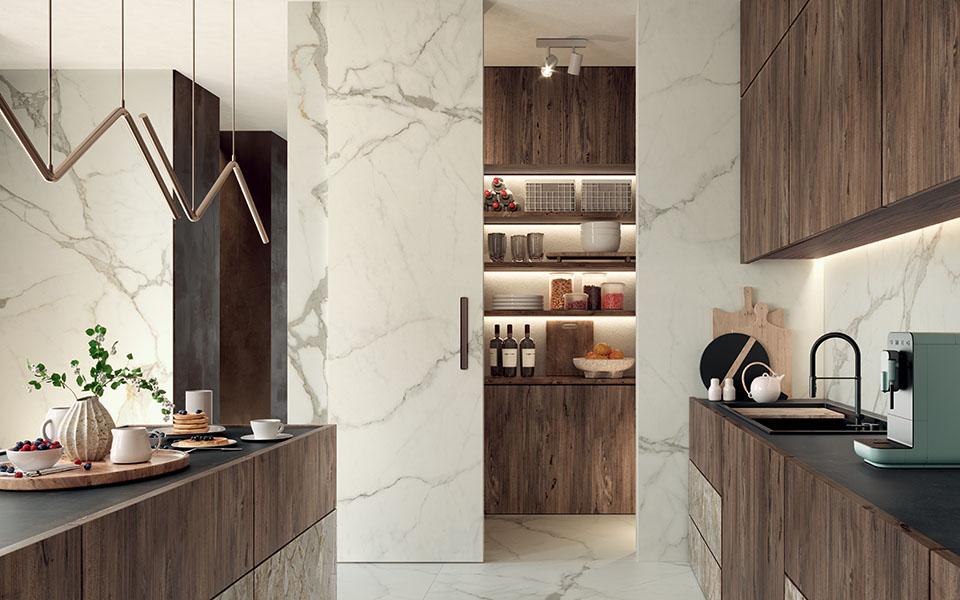
One of the most interesting directions in contemporary interior design is the pursuit of greater continuity between surfaces and volumes. Using the same material language for floors, walls and worktops makes it possible to create a coherent, unified space that also feels visually larger.

This approach makes it possible to interpret the kitchen as a space with a strong architectural identity. The variety of available effects, from stone to concrete, from wood to marble, offers a wide range of design possibilities while maintaining aesthetic continuity across the different surfaces.

Marble-effect porcelain stoneware: aesthetics and performance in the kitchen

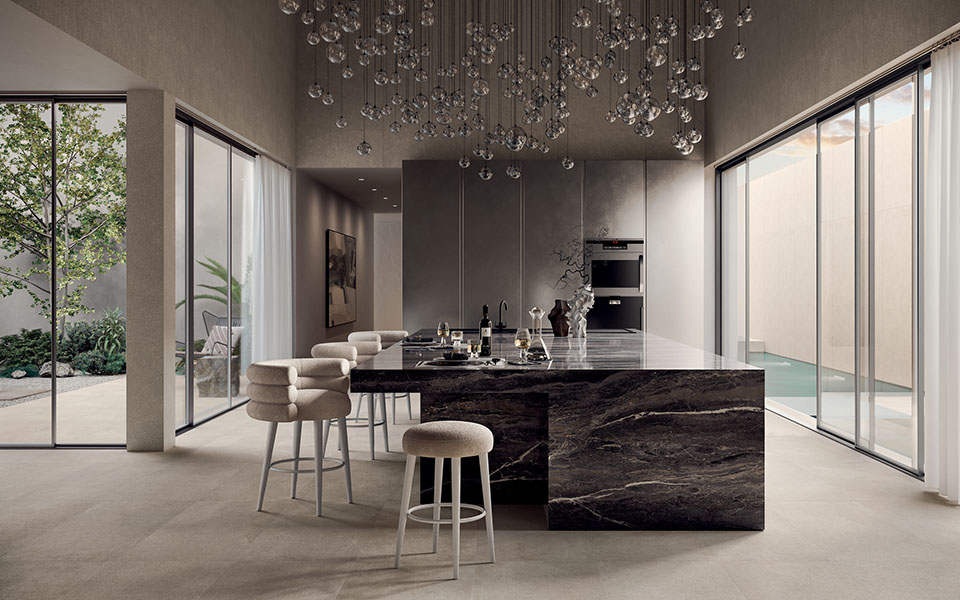
For those seeking the elegance of marble combined with high performance, marble-effect porcelain stoneware is a particularly suitable solution for the kitchen. It reproduces the depth of the veining and the character of natural stone while combining them with the resistance and practicality of ceramic.

Compared with natural marble, which requires greater care in maintenance and can be sensitive to acidic substances and stains, porcelain stoneware offers a low-porosity surface that is resistant and easy to manage in everyday use. It is a solution that combines aesthetic quality and functionality, even in spaces subject to intensive use.

Durability: quality and performance over time

Aesthetics define the identity of a kitchen, but it is the performance of its surfaces that determines its quality over time. Designing a space intended for everyday use means finding the right balance between aesthetic research, functionality and reliability.

From the worktop to the floor, every surface is exposed to different types of stress. Choosing high-performance materials such as porcelain stoneware therefore means going beyond simple cladding and helping to create a coherent, resistant design conceived to last.

The possibility of using the same material language across multiple surfaces also makes it possible to create visually continuous spaces without compromising the practical requirements of the kitchen. From the depth of black marble to the tactile character of a stone effect, every choice becomes part of a design vision capable of combining character, performance and durability.

YOU MAY ALSO BE INTERESTED IN

Follow us on social media

facebook instagram/cottodeste pinterest/cottodeste youtube/cottodeste linkedin/cottodeste

SUBSCRIBE TO OUR NEWSLETTER

Subscribe to the newsletter to receive exclusive dedicated offers.